The caption is a compact record
A useful caption answers enough questions for the photograph to remain intelligible away from its original page. It identifies the central subject or action, gives place and date when known, credits the maker and adds context that cannot be seen directly. It should not simply restate the obvious, and it should not turn speculation into fact.
Captions often outlive layouts. They are copied into catalogues, content systems, social posts and archive records. This portability makes small errors durable. A misspelled name or invented date can spread farther than a later correction, so verification at the first publication matters.
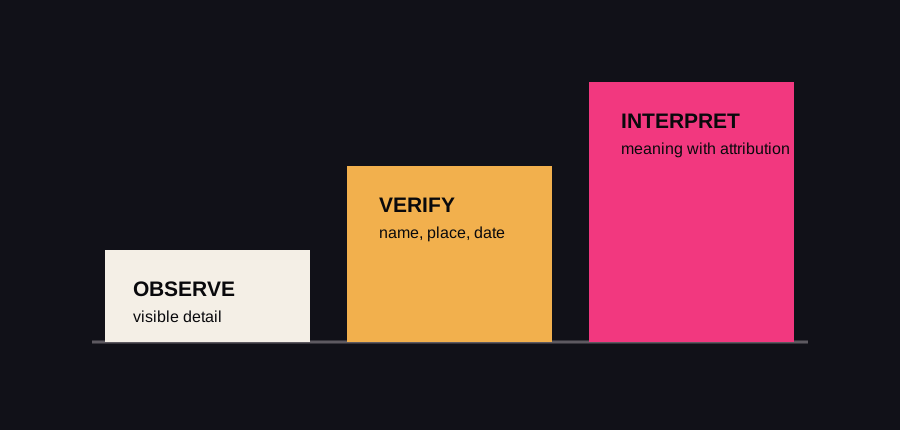
Separate three layers
1. What is observable
Describe visible action and relevant visual detail without assuming identity or intention. “A performer raises a hand toward the audience” is observable. “The performer thanks the audience” may be correct, but that intention needs the event sequence, audio or a reliable account.
2. What is verified
Add names, event, venue, place and date from a dependable source. Preserve the basis when dates differ between camera metadata, publication and programme. Use specific phrasing such as “photographed on” when the capture date is known and “published on” when only the publication date is certain.
3. What is interpreted
Historical or critical interpretation can be valuable, but attribute it. “The image became associated with…” is different from claiming that the photographer intended that later meaning. A caption can be concise and still signal where interpretation begins.
A flexible caption formula
Start with the subject and active verb. Add event and location. Give the full date if documented. Follow with one sentence of context that explains why this frame matters. End with the photographer or source credit in the archive’s standard form, plus a rights note where required.
Not every photograph supports every field. Do not fill a gap with a guess. Use “unidentified,” “date unknown,” “circa” or a documented date range where appropriate. Honest incompleteness is more useful than false precision.
Credit and rights are not decoration
A credit names the creator or source according to an agreement; it does not by itself grant permission. A rights statement records what use is permitted, restricted or still under review. Keep both attached to the image record, not only in the visual layout, because crops and exports can separate a file from visible credit text.
When the photographer is unknown, state “photographer unidentified” rather than “anonymous” unless anonymity was intentional. If an organization supplied a file but did not create it, distinguish source from creator. For reposted material, trace provenance backward instead of crediting the most recent account.
Names need particular care
Verify spelling, diacritics, stage names, group names and the identity of people with similar appearances. Avoid inferring sensitive personal characteristics from a picture. If identification comes from a contributor or later annotation, record that source internally even when the public caption remains short.
Collective performance creates another problem: a caption may identify only the most famous visible person and erase everyone else. Name additional people when verification and space allow, or describe the group accurately without implying that supporting performers are scenery.
Re-caption when context changes
A caption written for immediate news may become inadequate in a retrospective. The event once known to every reader may need explanation; an early identification may have been corrected; a crop may remove the visual detail the caption describes. Reuse should trigger review, not automatic copy and paste.
Do not use an archival photograph as generic illustration when its specific event conflicts with the new story. A picture of one performance should not silently stand for an entire career or unrelated controversy. If the relationship is illustrative, say so clearly and retain the original event information.
Correct the record visibly
Archive corrections should preserve the earlier value and the reason for change when practical. A structured note can record who changed a field, when, and which evidence supported the revision. Public pages need not expose every database action, but substantive corrections should not disappear without trace.